Project 04, Mobile App Design
Caremap
Empowering collaboration between families and care providers, transforming a low-converting website into a seamless mobile platform where seniors, families, and home care professionals can find each other and stay connected.
01, Overview
Connecting Those Who Care With Those Who Need It
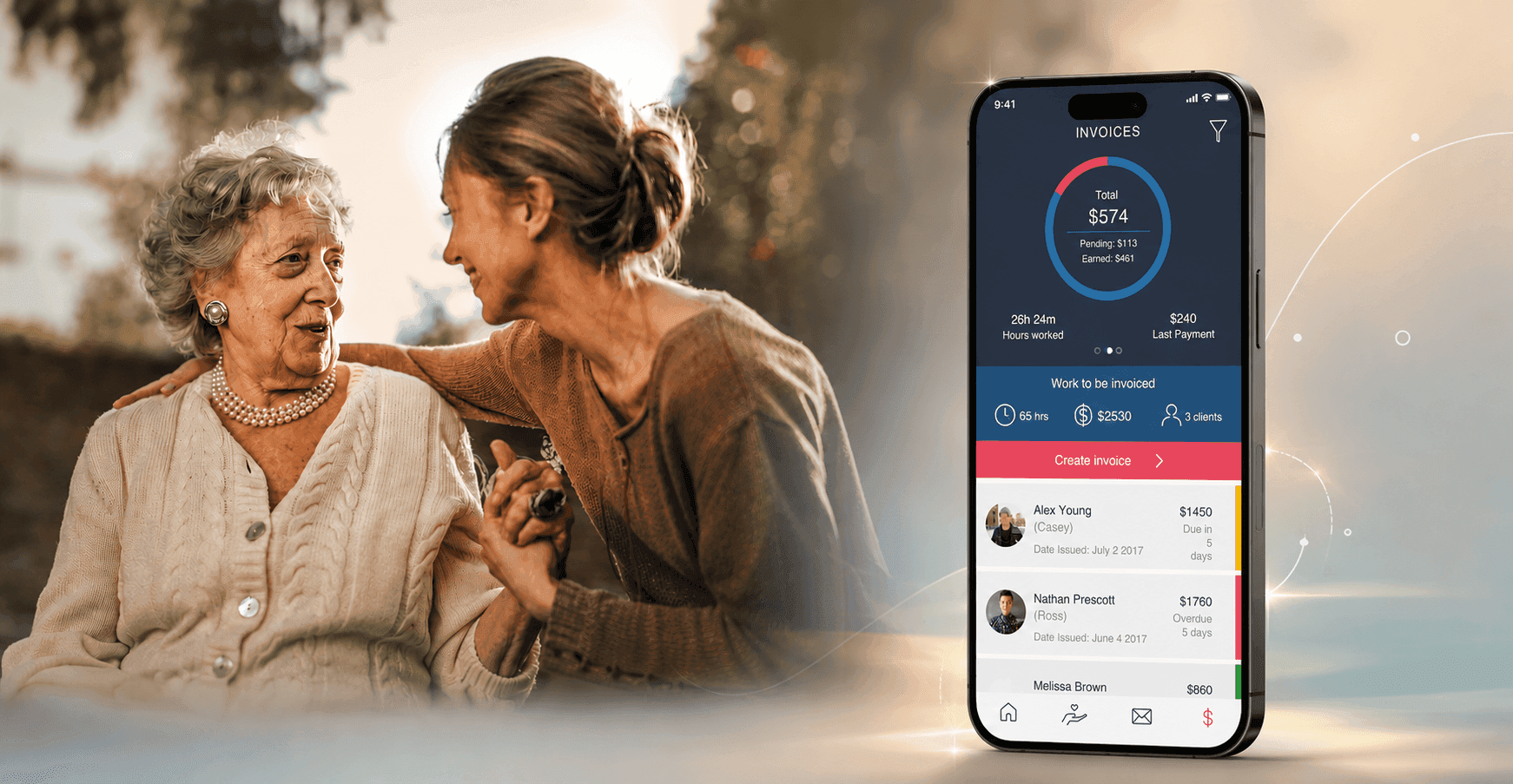
CareMap is a mobile application facilitating homecare services for multiple target audiences. The app allows care providers and care seekers to find each other and stay connected, families can search by location, specific needs, and language, while providers manage their availability and service offerings through their own profile.
As part of the product design team, I was responsible for UX research and interaction design, conducting user interviews with families and registered nurses, running observations in the field, and translating insights into wireframes, personas, and high-fidelity prototypes.
02, The Problem
Millions of Caregivers, No Efficient Way to Connect
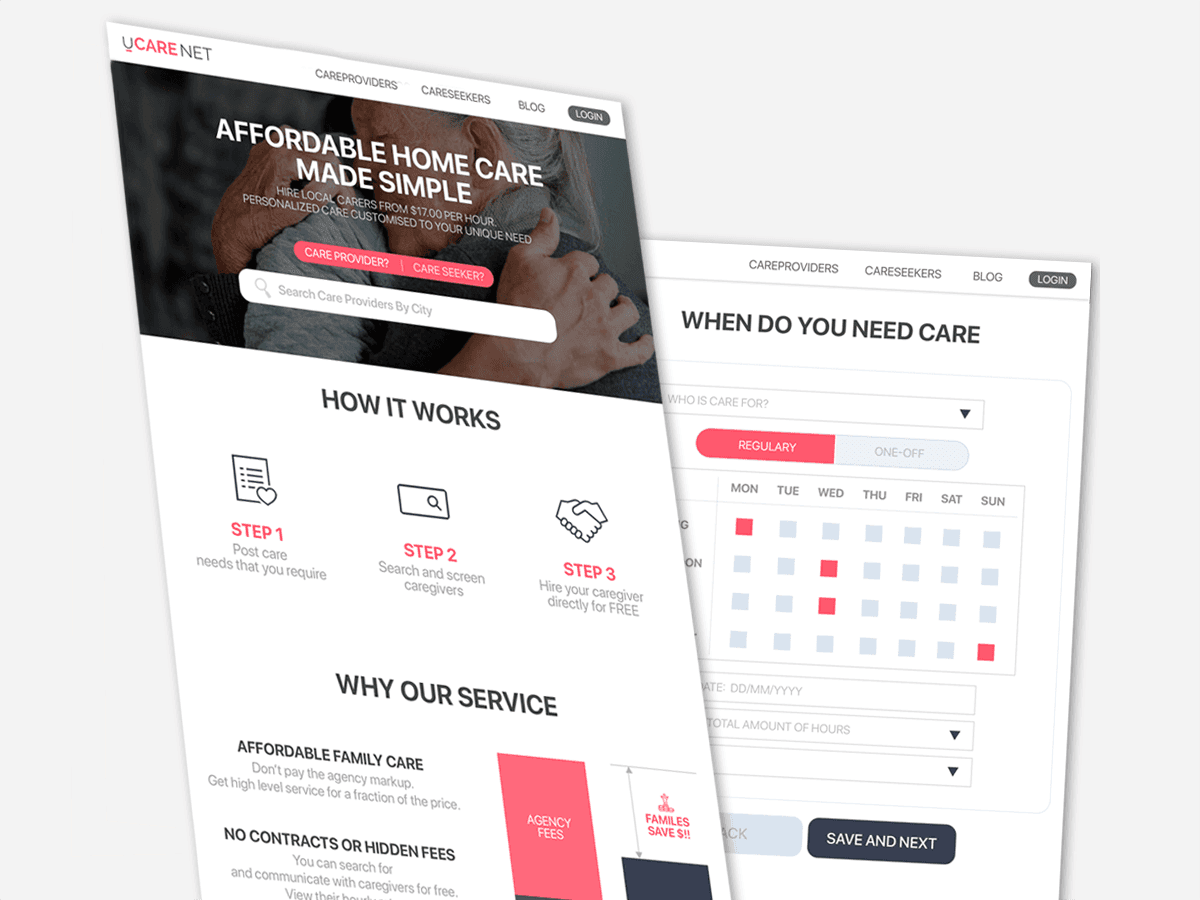
As life expectancy rises, the demand for quality home care is growing rapidly. The existing Caremap website gave families and providers a marketplace to meet, but the conversion rate was too low and the experience too fragmented to serve the scale of the real-world problem.
5.4M
Canadians providing care to a senior family member or friend, a number that continues to grow
19h
average hours per month families spend coordinating care, time that better tools could reclaim
48%
of Ontario family caregivers are caring for a parent or in-law, often from a different city
Low Conversion Rate
The existing Caremap website connected families and home care providers, but the conversion rate was critically low, users visited but didn't commit, pointing to fundamental UX and trust gaps.
Caregiver Time Burden
Families spend an average of 19 hours a month managing care for a senior loved one. The lack of efficient tools made coordination a full-time burden on top of already busy lives.
Fragmented Discovery & Communication
Families had no reliable way to find vetted providers based on location, language, or specific needs, and providers lacked a structured way to manage their availability and connect with clients.
03, The Solution
A Mobile Platform Built Around Real Needs
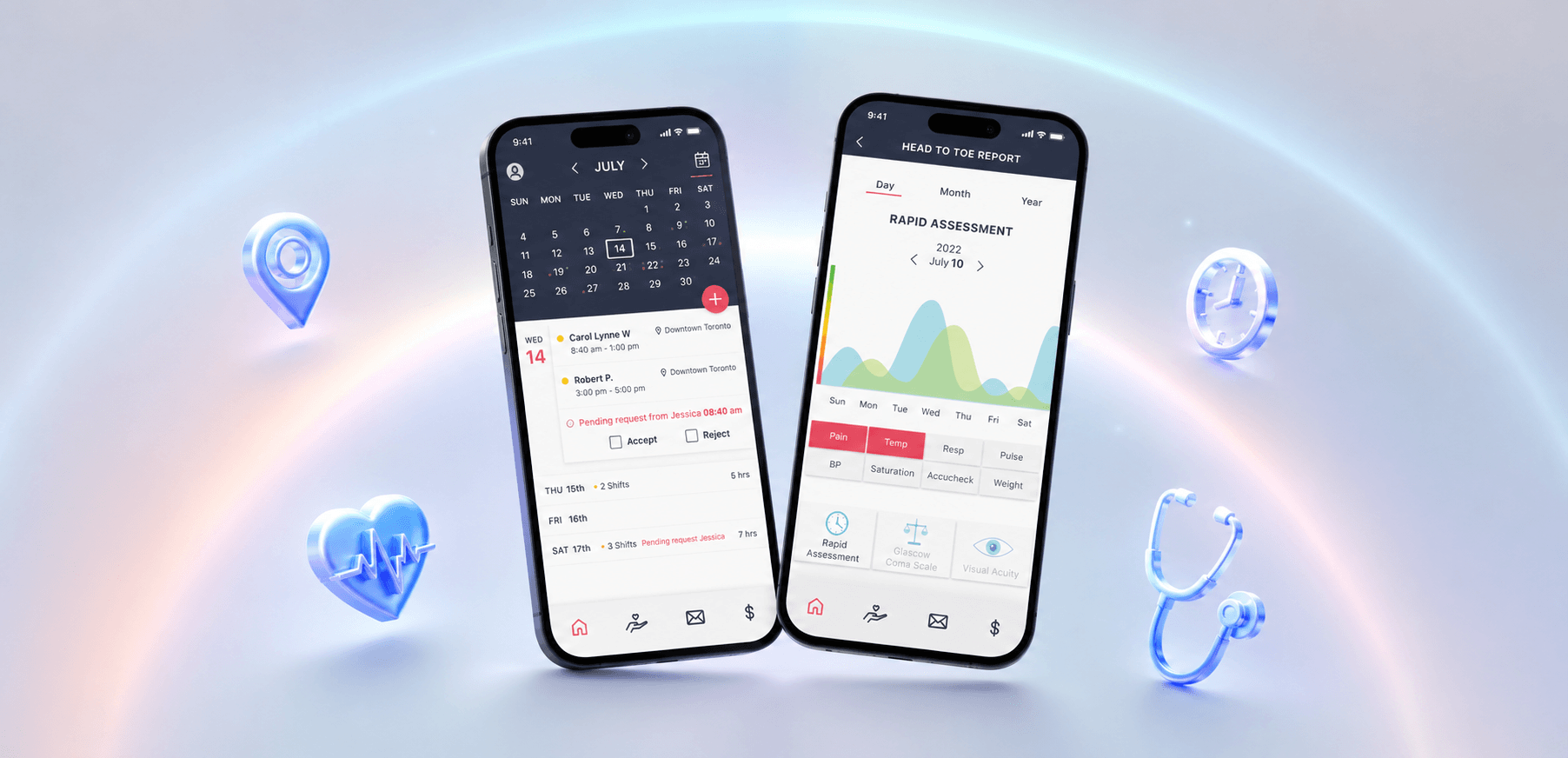
We proposed a mobile app extending the website's core marketplace with powerful new features, seamless scheduling, in-app messaging, and health monitoring tools. The design process was grounded in deep user research: interviews with families and registered nurses, field observations respecting Canadian healthcare privacy regulations, and persona-driven brainstorming with field experts from George Brown College.
Multi-Group Research
Conducted interviews and observations across two user groups, families of seniors and care providers, in collaboration with field experts at George Brown College.
User Personas & Journey Mapping
Built detailed personas for all three user groups to guide brainstorming, prioritise features, and ensure every design decision traced back to a real human need.
Mobile-First App
Designed a mobile app that carried the core website features plus new capabilities, scheduling, messaging, health monitoring, allowing seamless collaboration between all parties.
Fresh Brand Identity
Developed a new visual identity tailored for the app, legible modern typography and a considered colour scheme suited to the target users, to stand out in an evolving market.
04, Final Design & Outcome
Care, Simplified for Everyone Involved
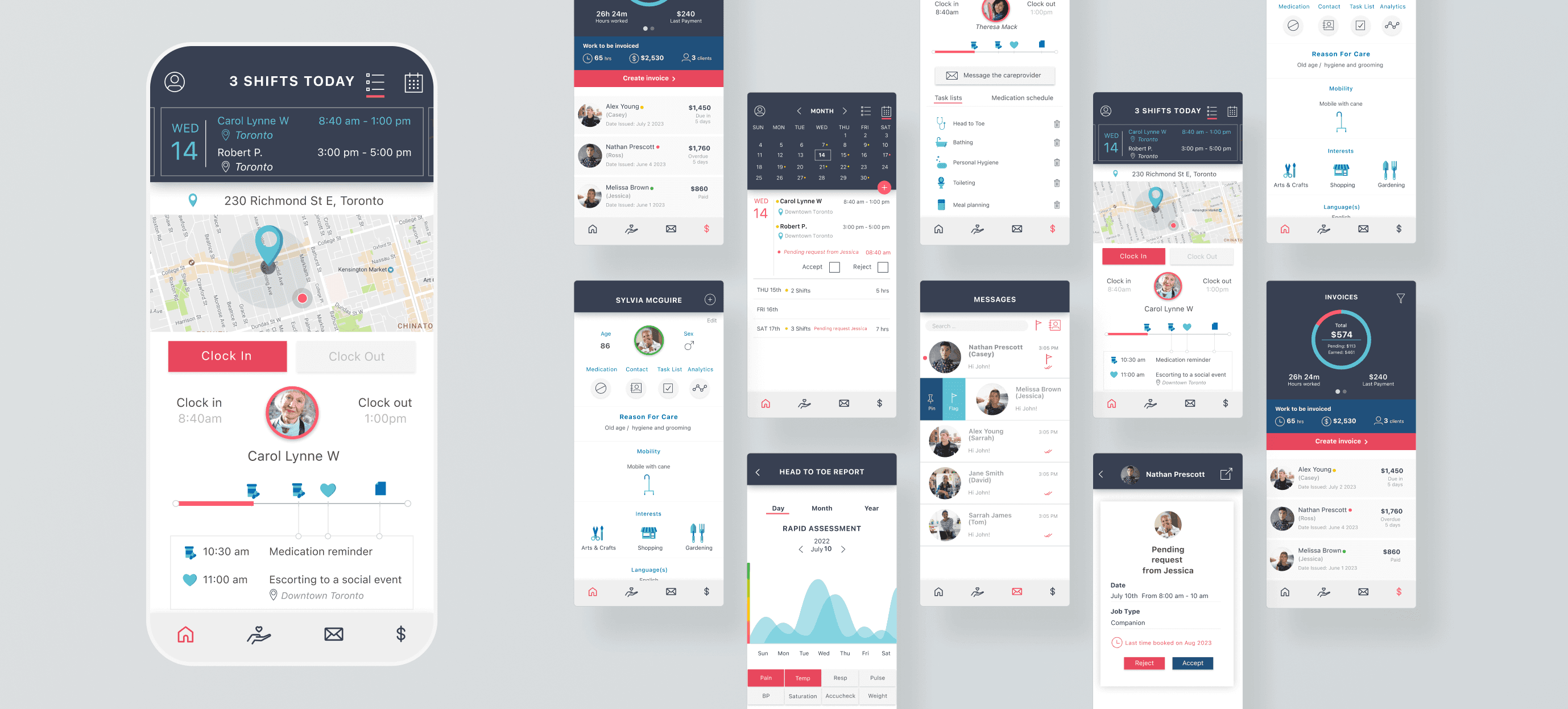
The final Caremap app delivers quick session scheduling, direct in-app messaging and calls with care providers, senior health condition monitoring, and a browsable work list for providers. A fresh brand identity was crafted alongside the product , setting it apart in a growing market and building the trust the website had failed to establish.
5.4M
Canadians providing care to a senior family member or friend (Stats Canada, 2012)
3M+
Ontarians who are family caregivers, 48% caring for a parent or in-law
19h
Average hours per month families spend coordinating care for a senior loved one
3
User groups identified, providers, families, and seniors (v2.0 roadmap)
2
User groups fully served in v1.0: home care providers and families of seniors
v2.0
Senior health monitoring features scoped and planned for the next product iteration
The first three figures are the market context (Statistics Canada, 2012) that justified the investment; the last three are the delivered scope, two user groups served at v1.0, one unified app replacing the website, with senior monitoring scoped for v2.0.
“Design doesn't rely on aesthetics alone, it primarily focuses on user interaction and usability. Understand the user, understand their problems, then design the solution.”